Category: Experiments

  • The Great South African G90 2021 Tour

    I used to own a Yaesu FT-857D, three of them, in fact. With them I made all sorts of contacts: straight contacts, QRP digital contacts, mobile FM contacts, and they even pushed my FL2100Z amplifier to full output when I needed to. I loved them and trusted them. While the screen might have been a little small for my older eyes, the radios never ever let me down. I still miss them a lot.

    But times are moving on and instead of following the way of the FT-101 and other dinosaurs (don’t get me wrong: They were excellent radios) I wanted to get some first hand experience of the more current SDR radio trends. First I bought a mcHF portable 5 watt radio which was a great buy and I’ll talk about that more in another post, but then I wanted to but a really “complete” radio for the bush. Smaller than the FT-857 but bigger than the mcHF and an all-rounder. The dice was rolled and fell on the Xiegu G90 which arrived in my shack a few weeks ago. While we can discuss all the details at length in other posts, this post is to let it travel around the country and experience different operators and conditions and antennas.

    Thus, the idea of “The Great South African G90 2021 Tour” was born. I decided to let my baby go visit some new places. My ICOM 7100 will have to do backup duty in the shack while the baby is travelling.

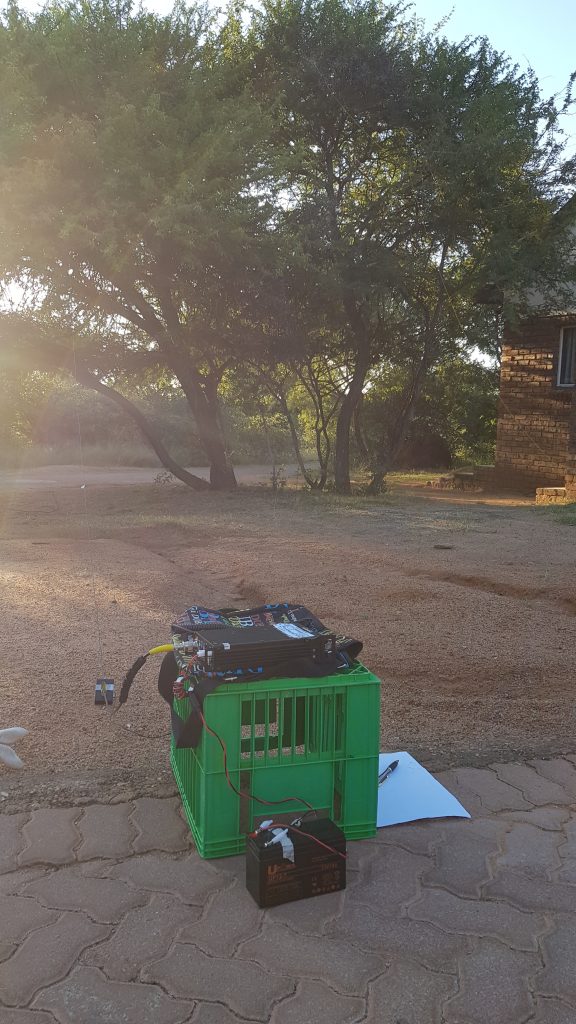
    First stop of the tour was my bush camp. I took my Xiegu G90 on a week long tour to the bush in Dikhololo (north of Brits and Hartebeespoort Dam). I have to admit it was a lot of fun to operate, even though the noise levels were appalling and in many cases made operating impossible on a particular spot.

    In summary I was very happy with it. It is not a big radio but it can stand its own.

  • LED Lamp Behaviour

    LEDlamp
    LEDlamp

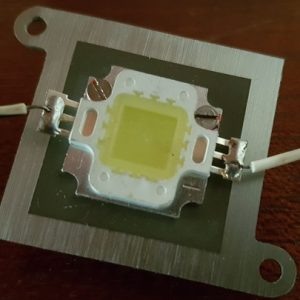
    So I got my hands on some of these 12 volt LED lamps (chips / modules / lights / whatever) and since I had enough to burn one or two “by accident” I thought I should spend a few minutes to get to know them better.

    I’m not referring to your regular little round 1.2 volt LEDs that we use by the millions for indicators and things on our projects, but instead the square, yellow modules around 25mm per side that makes white light for floodlights and so on.

    So before you pull out your 12 volt battery and blow up some lights, here is an important message: LEDs are current devices, they do not like constant voltages and will promptly reward you with a puff of smoke if you persist, much like the inkfish did in the sea when it tried to escape. You have been warned. Use a constant current to feed them and everyone will be happy.

    The other thing I completely underestimated is the amount of heat dissipated. They come without any protection whatsoever and your first job is to stick them to a heat sink. The 10 watt units I have require a heat sink not unlike the ones found in old computers.

    Once I had my head wrapped around this weird change from incandescent lamps, I had a lot of fun playing with my packet of LEDs. They produce good white light at reasonable powers, so even if you drop the current through a small resistor from a 12v car battery they will still work.

    However, there is one worrysome feature that I noticed. Assuming that each little LED is dropping around 2.98 volt (a not unreasonable number according to https://www.ledsupply.com/blog/wiring-leds-correctly-series-parallel-circuits-explained/) then you will end up with a matrix like this:

    LEDmatrix
    LEDmatrix

    or like this:

    A B C
    D E F
    G H I

    This is not the end of the world, except that if the LEDs are not closely matched they will draw different currents, with the weakest link obviously blowing first. I expect this will manifest as one LED lighting up slightly more than another in the chain.

    This is exactly what EDN found on their site at
    https://www.edn.com/design/led/4325905/Driving-high-power-LEDs-in-series-parallel-arrays


    I’ve made a short YouTube video to illustrate my concerns https://youtu.be/nf1654eiy1A

    Watch how the LED in position “C” lights up first and then goes on to illuminate brighter and brighter. It may be the one that burns out first, or overheats the most.

    What do you think, am I right or am I wrong?